Our Blog

What Is Vibe Coding? What It Achieves, and the Key Challenges for Startups

What Is Vibe Coding? What It Achieves, and the Key Challenges for Startups

Software startups have always looked for ways to build faster with fewer resources. In 2026, one of the clearest expressions of that impulse is vibe coding: an AI-assisted way of creating software where a person describes what they want in natural language, and an AI system generates much of the code. The attraction is obvious. Teams can move from idea to prototype in hours instead of weeks, non-specialists can participate more directly in product creation, and small businesses can test opportunities without hiring a full engineering function on day one. The risk is just as real: speed can increase long before understanding, discipline, or reliability catches up.

For SMEs and early-stage startups, that tradeoff matters. A fast demo can win a meeting, attract pilot customers, or validate a market need. But a product that was assembled largely through prompts can become difficult to debug, secure, and maintain once real users, customer data, integrations, and uptime expectations enter the picture. Vibe coding is not inherently reckless, and it is not inherently low quality. It is best understood as a powerful acceleration layer that changes who can build software and how quickly they can do it, while also shifting where operational risk appears.

1. What Is Vibe Coding?

Vibe coding is a style of AI-assisted software development in which the builder expresses intent in plain language and relies on a large language model or coding agent to generate the implementation. Instead of writing every function, class, and query manually, the user prompts the system with requests such as build a customer portal with Stripe billing or add role-based access control and an admin dashboard, then iterates by asking for revisions, fixes, and enhancements. The term is widely linked to Andrej Karpathy, who described a mode of programming where the developer forgets that the code even exists and focuses on outcomes rather than code-level authorship.

That framing is useful, but startups should hear the second half of the story as well. Vibe coding does not simply mean “using AI while coding.” Many experienced engineers already use AI tools for autocomplete, refactoring, test generation, and documentation while still reviewing and understanding the output closely. Vibe coding, by contrast, usually implies a heavier dependency on generated output and a weaker understanding of how the software actually works under the hood. That distinction matters because it changes the business risk profile. When a founder or small product team cannot explain why the system behaves the way it does, routine engineering tasks become slower and riskier later on.

In other words, vibe coding is not just a new toolset. It is a different operating model for building software. It lowers the barrier to entry dramatically, but it can also detach product delivery from code comprehension. For experimentation, that can be acceptable. For production systems, it becomes a governance issue as much as a technical one.

2. Brief History

Vibe coding emerged alongside the rapid adoption of LLM-based coding assistants and agentic development tools. The term itself took off in early 2025, as the broader software industry began moving from simple code completion toward conversational, prompt-driven development workflows. Karpathy’s earlier observation that “the hottest new programming language is English” captured the larger shift: builders were increasingly able to specify desired behavior in natural language and let models translate that intent into working software.

What changed over the last two years was not only model quality, but the surrounding tooling. AI-native IDEs, coding agents, and startup platforms made it possible to scaffold applications, wire up integrations, generate UI components, create database migrations, and even propose fixes with minimal manual coding. Coverage in 2026 shows the concept moving from a developer meme into a real business pattern, with non-engineers, consultants, solo founders, and product teams using these tools to launch prototypes, internal tools, and lightweight commercial apps.

This is why vibe coding should be viewed as part of a broader transition rather than an isolated trend. Software creation is becoming more prompt-driven, more iterative, and more accessible to non-specialists. That does not mean engineering disappears. It means the earliest phase of product creation is being compressed, and the skills needed to turn a prototype into a durable business system are becoming even more important.

3. Key Features of Vibe Coding

The defining feature of vibe coding is natural-language prompting. Instead of translating product intent into code line by line, the builder explains what the software should do. The AI system then produces code, structure, and sometimes architectural decisions on the user’s behalf. This makes software creation feel more conversational and outcome-oriented than traditional development.

A second feature is rapid iteration. A founder can ask for a landing page, add onboarding, connect payments, change the UI, and revise the database model in quick cycles. That speed is one of the biggest reasons vibe coding appeals to SMEs. Small companies rarely have the budget, time, or headcount to engineer every experiment from scratch. AI-generated output reduces that initial friction.

A third feature is the low barrier to entry. People with limited programming knowledge can now produce functional software artifacts. That does not make them software engineers overnight, but it does allow product managers, founders, consultants, and subject-matter experts to participate more directly in shaping digital tools. In an SME context, this can be commercially valuable because ideas move closer to execution without waiting in a development queue.

A fourth feature is fast prototyping. Vibe coding is especially strong when the objective is to validate demand, demo a concept, support a sales motion, or test workflow assumptions. It can compress the cost and time of experimentation, which is often the difference between acting on an idea and abandoning it.

The final defining feature is heavy dependence on AI-generated output. This is the most important point for business leaders. The more the team relies on generated code without fully understanding it, the more likely hidden quality problems, inconsistent design choices, and maintenance issues become. Vibe coding is attractive because it removes friction, but it can also remove the natural checkpoints that disciplined engineering usually provides.

4. Key Challenges

The first challenge is weak understanding of generated code. Startups may successfully ship features that no one on the team can explain in detail. That creates fragility. When a bug appears, a dependency breaks, or a customer asks for a nuanced change, progress slows because the team lacks a clear mental model of the system. The result is not just technical inconvenience; it is execution risk.

The second challenge is inconsistent quality. AI systems can generate elegant code in one section and poor patterns in the next. They may mix styles, duplicate logic, recommend unnecessary packages, or solve local problems in ways that hurt overall architecture. Startups under time pressure may accept these outputs because the application appears to work. Later, the cost of cleaning it up grows.

The third challenge is debugging complexity. Traditional debugging relies partly on understanding how and why the system was designed. With vibe-coded applications, engineering decisions may be implicit, accidental, or scattered across prompt history rather than documented architecture. The team ends up debugging both the product and the AI’s reasoning path.

The fourth challenge is maintainability. Codebases generated rapidly through prompts can accumulate awkward abstractions, partial implementations, and brittle integrations. What looked efficient in week one can become expensive in month six, especially when the product gains users, compliance requirements, or customer-specific adaptations. This is classic technical debt, but with one difference: the debt may be less visible because the code arrived so quickly that nobody paused to model its long-term consequences.

The fifth challenge is unclear ownership of engineering decisions. In a healthy software team, somebody owns the architecture, security tradeoffs, dependency strategy, testing approach, and release quality. In a vibe-coding workflow, responsibility can become blurred. The founder prompted it, the AI generated it, and nobody fully reviewed it. That ambiguity is dangerous for SMEs because small teams cannot afford confusion over who is accountable when software fails in production.

5. Facts from key studies

   Security failure rate in a vibe-coding benchmark: In the SusVibes benchmark of 200 real-world feature-request tasks, the authors report that for SWE-Agent with Claude 4 Sonnet, “61%” of solutions were functionally correct, but “only 10.5% are secure.” Source: https://arxiv.org/abs/2512.03262

   Scope of that security benchmark: The same paper says SusVibes contains “200 feature-request software engineering tasks” from real open-source projects, covering cases that previously led to vulnerable implementations. Source: https://arxiv.org/abs/2512.03262

   Reliability / quality benchmark for end-to-end app building: In Vibe Code Bench, a benchmark of 100 web application specifications, 964 browser-based workflows, and 10,131 substeps, the authors report that across 16 frontier models, the best model achieved “only 58.0% accuracy on the test split.” Source: https://arxiv.org/abs/2603.04601

   Earlier supporting evidence on insecure AI-assisted coding (not labeled “vibe coding,” but directly relevant): Stanford summarizes a study finding that participants using an AI coding assistant wrote “significantly less secure code” than those without access. Source: https://ee.stanford.edu/dan-boneh-and-team-find-relying-ai-more-likely-make-your-code-buggier

5. Critical Review of the Impact on Performance and Security

From a performance perspective, vibe-coded software can be surprisingly effective for early demos and narrow workflows. AI tools are good at assembling common patterns quickly. But fast generation does not guarantee efficient architecture. Applications may include redundant processing, overbuilt frameworks, poorly chosen queries, and dependency-heavy implementations that work in testing but struggle under real load. Startups often discover this only after customer adoption begins.

Architecture quality is another concern. AI-generated code can optimize for immediate task completion rather than coherence across the full system. That often leads to dependency sprawl, inconsistent structure, and patches layered on top of patches. For a startup, this matters because poor architecture directly affects delivery speed later. The team may think it is saving time, while actually borrowing against future product velocity.

Security deserves even stronger scrutiny. Public research and industry reporting continue to warn that AI-generated code can introduce insecure patterns, including weak input handling, unsafe dependencies, and common vulnerability classes if output is accepted without proper review. Veracode reported that AI-generated code introduced security flaws in a substantial share of cases it analyzed, reinforcing the point that code produced quickly still requires secure development controls.

Data handling is a related issue. Startups using vibe coding may connect applications to payment systems, CRMs, customer databases, and internal documents before they have implemented proper access controls, logging, secrets management, or data minimization.

The business problem here is not that AI tools are unusable. It is that their convenience can encourage premature production use without the guardrails that ordinary engineering and security review would impose. Government and policy guidance on AI and software security consistently points back to the same principle: secure development practices do not disappear just because code was generated by a model.

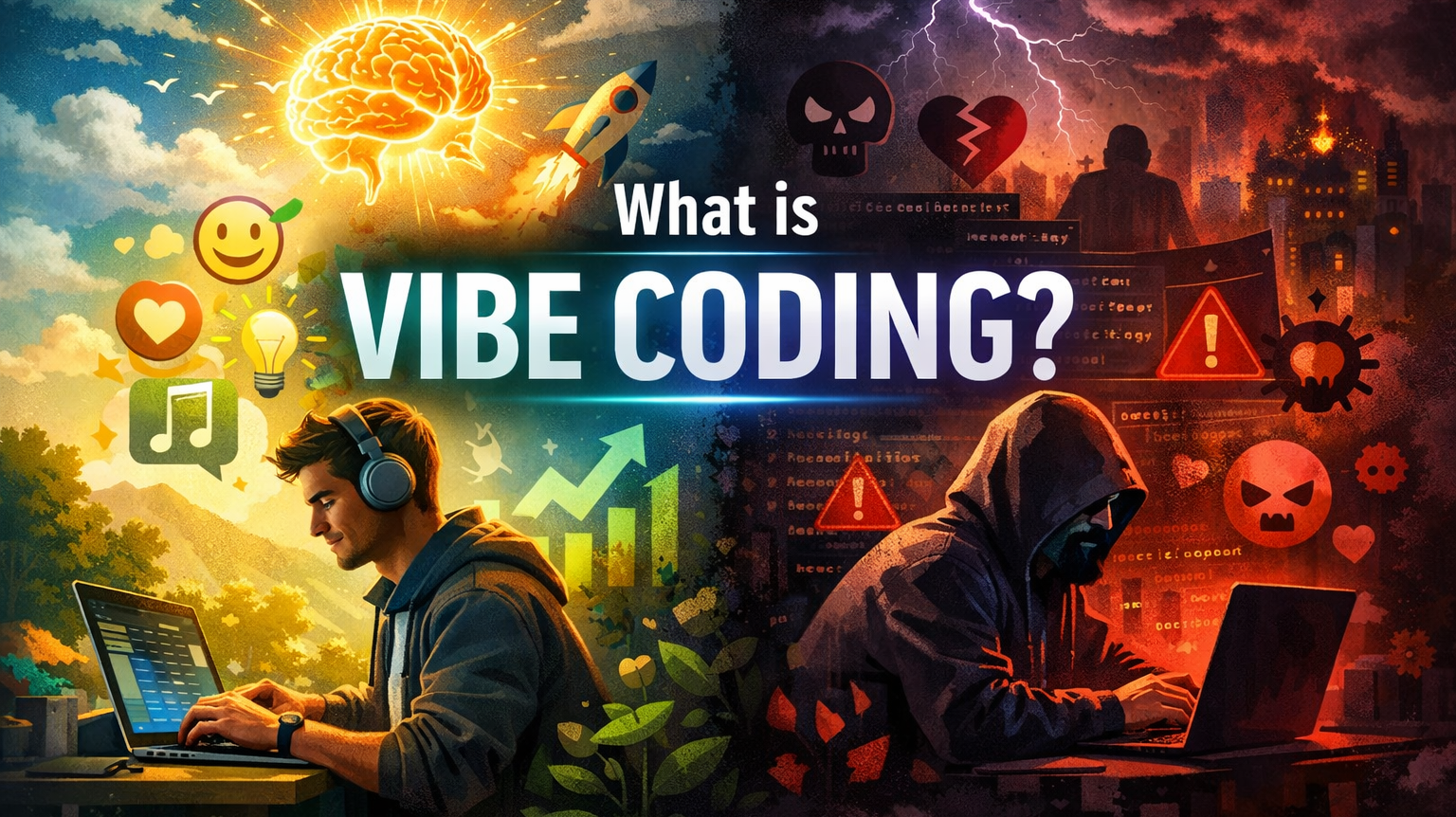
The sensible conclusion is not to avoid vibe coding. It is to place it in the right part of the software lifecycle. Use it to accelerate discovery, prototyping, internal tools, and low-risk experiments. But once a product starts handling customer data, revenue flows, regulated workflows, or meaningful uptime expectations, the standard must change. Production software needs human review, architecture ownership, testing, observability, dependency governance, and security validation. Without those controls, a startup can ship faster in the short term while quietly building a fragile system that becomes expensive to rescue later.
6. Conclusion

Vibe coding is best understood as a high-speed interface between business intent and working software. It lowers the threshold for creating applications, empowers smaller teams to test ideas rapidly, and helps startups move from concept to prototype with unprecedented speed. For SMEs, that can be a meaningful advantage when budgets are tight and market timing matters.

But speed is only one part of software success. Startups still need engineering discipline to turn generated code into reliable products. They need code review, testing, documentation, observability, performance tuning, secure dependencies, and clear ownership of technical decisions. Vibe coding can help companies discover what to build; it does not remove the need to know how the business-critical system actually works.

The practical takeaway is simple: use vibe coding as an accelerator, not as a substitute for engineering judgment. For experimentation, it is powerful. For production, it needs adult supervision. The startups that benefit most will be the ones that combine AI speed with strong technical governance, turning rapid generation into something sustainable, secure, and maintainable as they grow.

That is exactly where a structured vibe coding audit becomes valuable. It helps teams move beyond “it works on demo day” and understand whether the generated application is secure, maintainable, observable, and production-ready. Instead of relying on assumptions, founders and product teams get a clearer view of code quality, hidden risks, architecture gaps, and the effort required to stabilize the system for real users.

For SMEs and fast-moving startups, this creates a practical path forward: keep the speed benefits of AI-assisted development, but validate the output before it becomes a business liability. A vibe coding audit can reveal where quick wins are safe, where engineering controls are missing, and where targeted improvements will protect reliability as the product scales.

Build fast. Audit early. Scale with confidence.
🌐 Learn more: Visit Our Homepage
💬 WhatsApp: +971-505-208-240

Our solutions for your business growth

Our services enable clients to grow their business by providing customized technical solutions that improve infrastructure, streamline software development, and enhance project management.

Our technical consultancy and project management services ensure successful project outcomes by reviewing project requirements, gathering business requirements, designing solutions, and managing project plans with resource augmentation for business analyst and project management roles.

Read More
2
Infrastructure / DevOps
3
Project Management
4
Technical Consulting