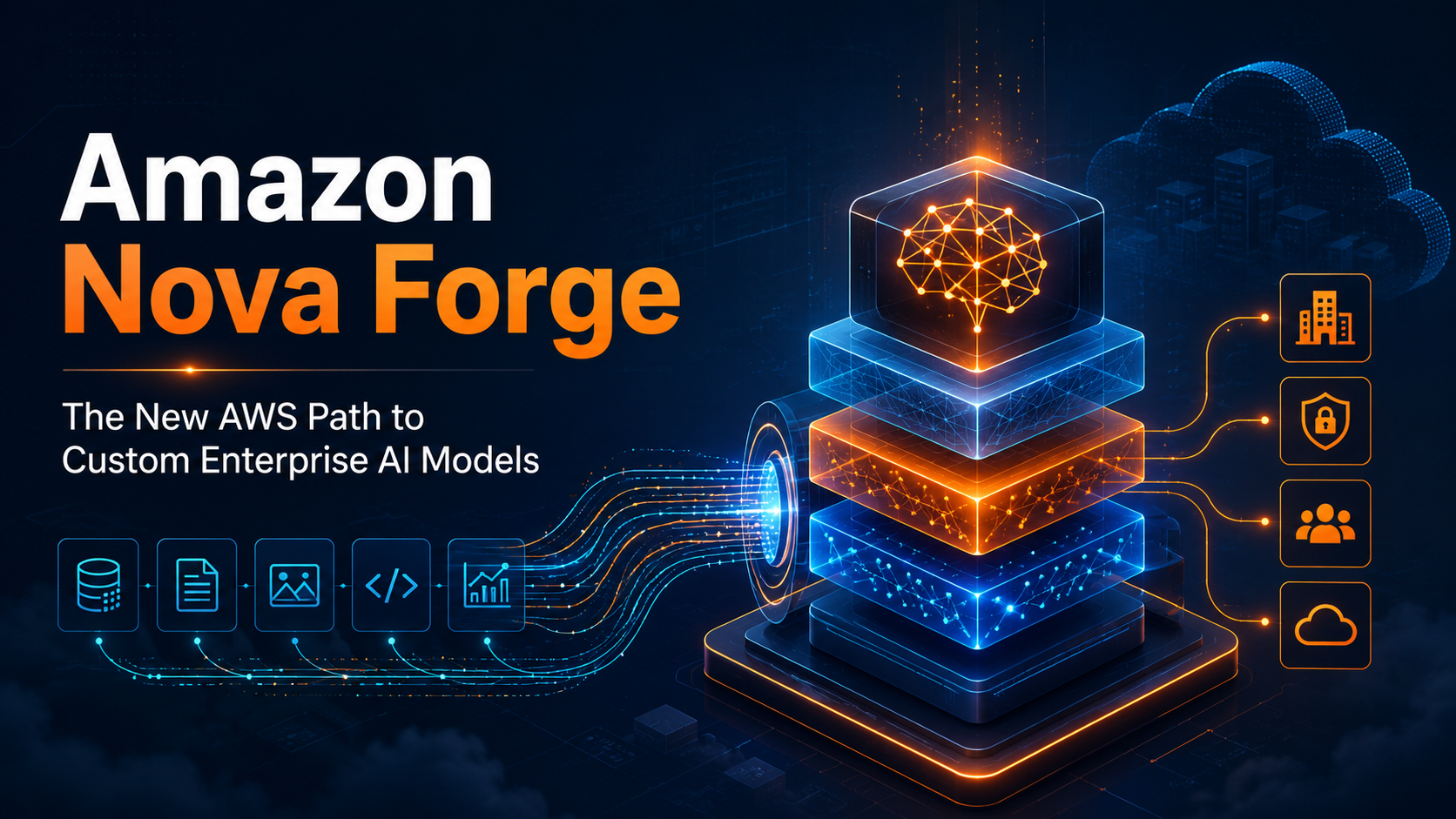
Amazon Nova Forge: The New AWS Path to Custom Enterprise AI Models
What Is Amazon Nova Forge?
Most companies do not need to train a frontier AI model from scratch. The cost, infrastructure, data engineering, research talent, and operational risk are simply too high for most enterprise AI programs. At the same time, generic large language models often do not understand the business deeply enough to deliver reliable value in production.
That gap is exactly where Amazon Nova Forge becomes important.
Enterprises are no longer asking, “Can we experiment with generative AI?” They are asking much harder questions: Can this model understand our policies, workflows, products, risks, contracts, systems, tickets, and customers? Can we control where our data goes? Can we govern the model? Can we measure quality? Can we justify the cost?
Amazon Nova Forge is AWS’s answer to a growing enterprise need: a path to build more deeply customized AI models without starting from zero.
AWS describes Nova Forge as a service that lets organizations build their own frontier models using Amazon Nova, starting from early model checkpoints, blending proprietary data with Amazon Nova-curated training data, and hosting custom models securely on AWS.
For CTOs, CIOs, AI leaders, and senior IT decision-makers, this is more than another model customization feature. It signals a shift in how enterprises may approach AI architecture over the next few years.
Amazon Nova Forge is a new AWS service designed to help enterprises build customized versions of Amazon Nova models using their own proprietary data along with Amazon-curated training data.
In simple terms, Nova Forge gives organizations a way to move beyond basic prompting, retrieval, or late-stage fine-tuning. Instead of only adapting a finished model at the end, Nova Forge introduces what AWS calls an “open training” approach. This gives customers access to model checkpoints across different phases of model development and allows them to blend their own data into the training process earlier and more deeply.
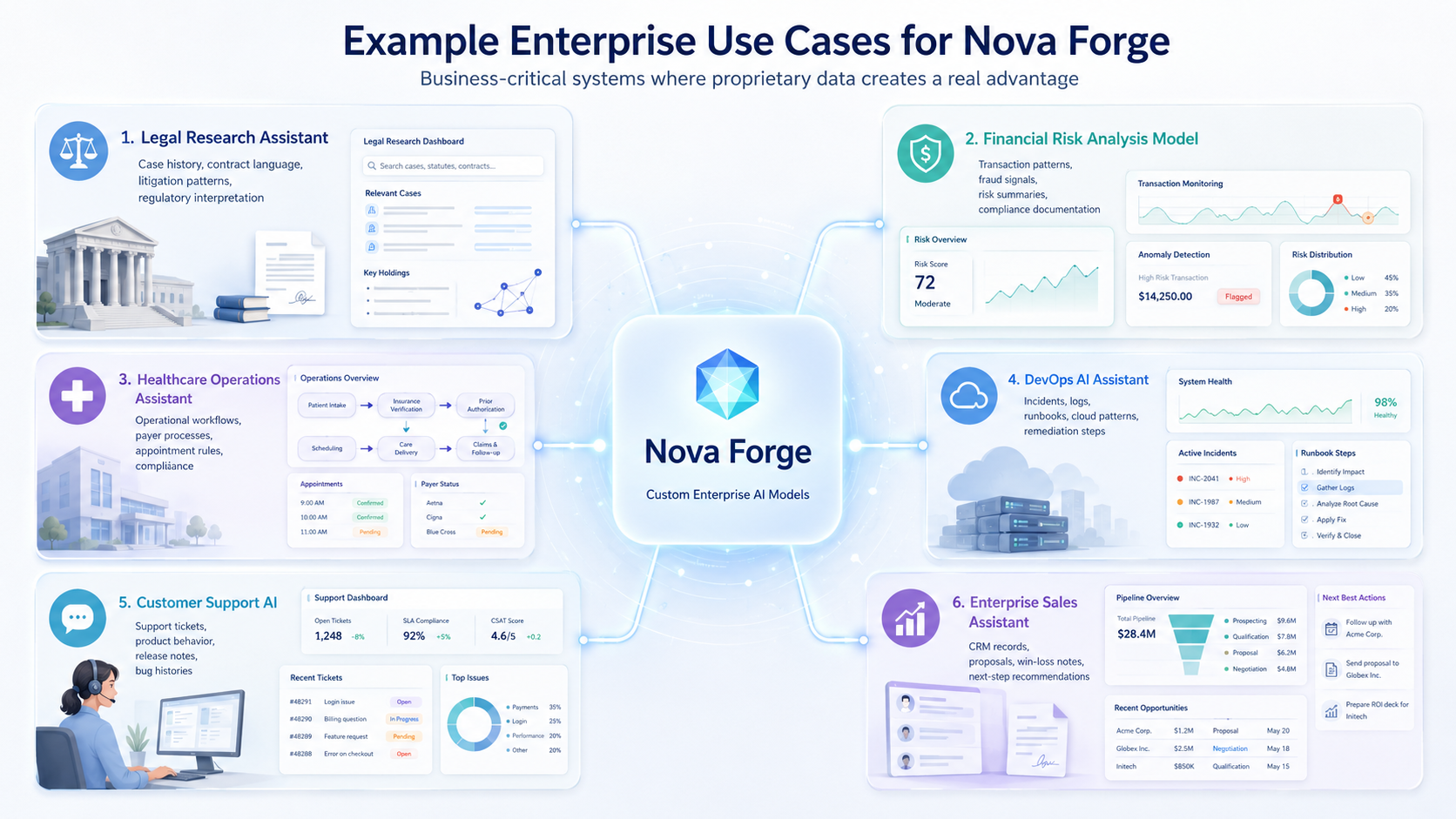
That matters because many enterprises have domain knowledge that is not publicly available. It may be buried in internal documents, legal case histories, engineering tickets, transaction patterns, product manuals, operational logs, sales proposals, support interactions, and compliance procedures.
A generic LLM can answer general questions. A model customized around proprietary data can potentially reason with much more business-specific context.
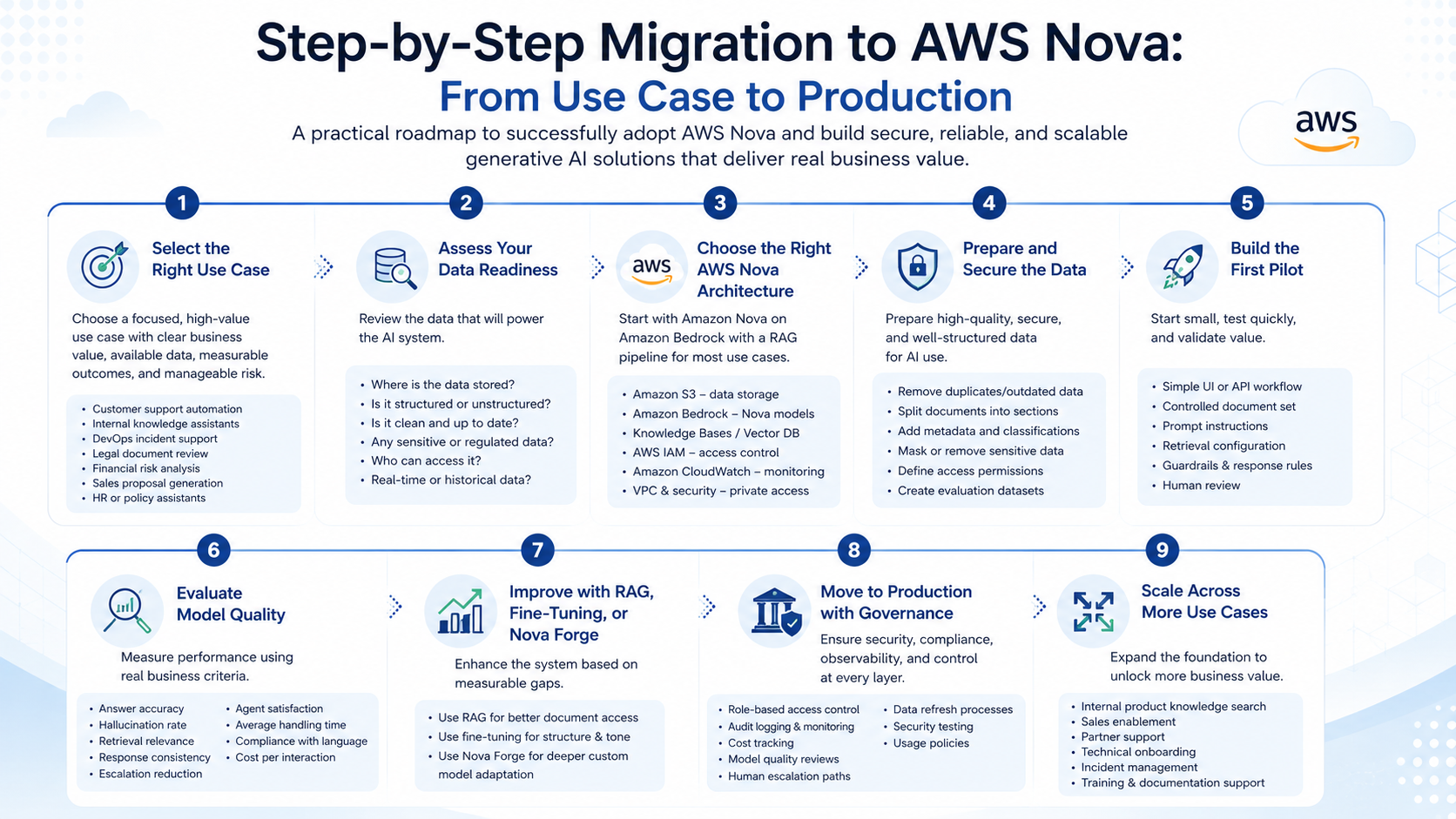
AWS documentation states that Nova Forge supports capabilities such as access to checkpoints across model development phases, blending proprietary data with Amazon Nova-curated datasets, reinforcement learning with reward functions, optimized training recipes, and responsible AI tooling for alignment and runtime moderation.
This makes Nova Forge different from simply uploading files to a chatbot or fine-tuning a model to follow a specific format. It is positioned for organizations that want a deeper custom model strategy on AWS.