Our Blog

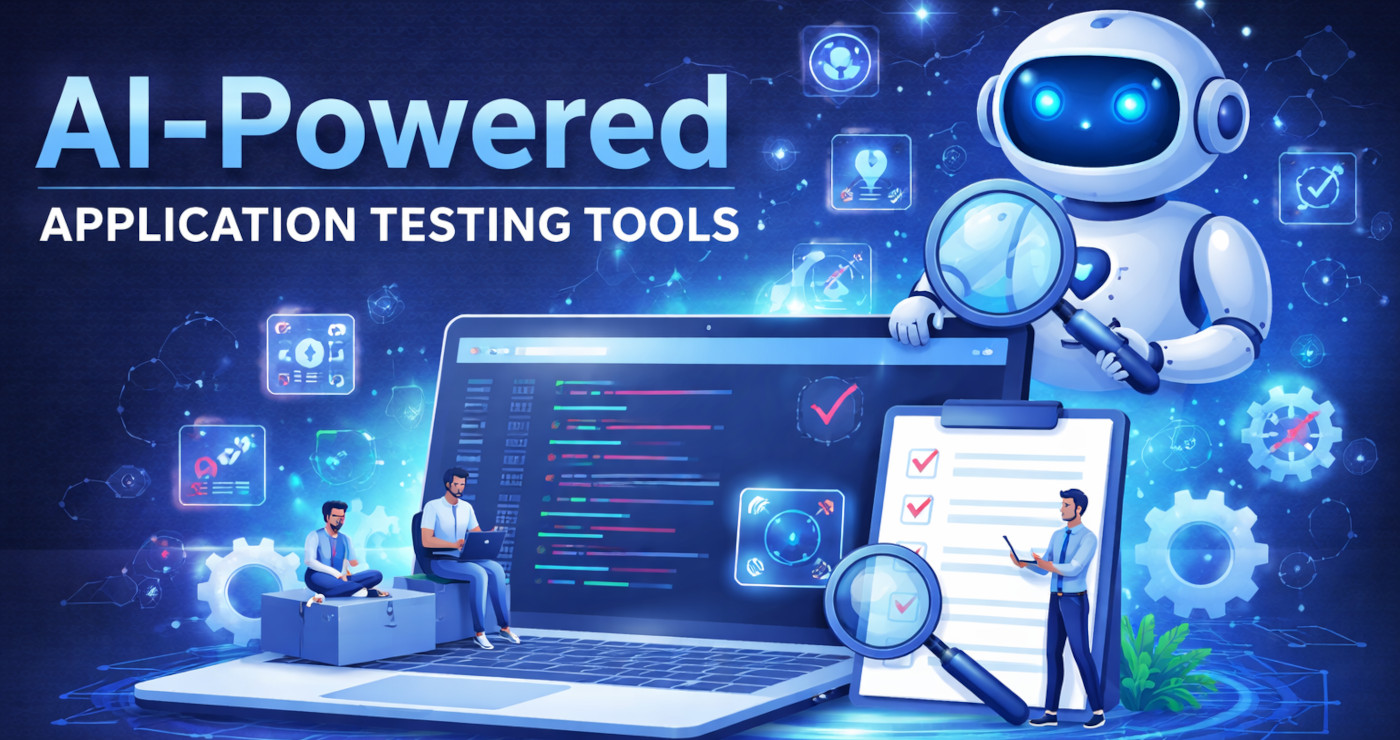
AI Powered Application Security Tools
AI Powered Application Testing

AI Powered Application Security Tools

Artificial intelligence has rapidly matured from proof of concept to operational dependency. Today, organizations are leveraging AI models for automating decision-making, optimizing business processes, providing personalized customer engagement, and enhancing internal productivity. However, with the increasing integration of AI models within the business, they also introduce a new risk profile altogether that was not designed to be addressed by traditional application security programs.

AI models are different from traditional software applications. They are probabilistic, data-driven, and dynamically evolving. Their execution lifecycle is no longer determined by code alone but by training data, model structures, deployment contexts, and post-deployment interactions. This has substantially expanded the attack surface for the organization. Threats may emerge from tainted data, unsafe model artifacts, insecure pipelines, or even counterintuitive model behaviors that are incongruent with regulatory or ethical mandates.

AI security testing platforms have emerged as a response to this new paradigm. These platforms are an extension of traditional AppSec programs and introduce new capabilities specifically designed for AI. For the business leader, they provide a mechanism for responsible acceleration of AI adoption, finding a balance between speed and resilience, innovation and risk management.
Key Terms

AI (Artificial Intelligence) Computer systems designed to perform tasks that normally require human intelligence, such as learning, reasoning, prediction, and decision-making.

AppSec (Application Security) The practice of identifying, fixing, and preventing security vulnerabilities within software applications.

DAST (Dynamic Application Security Testing) Security testing performed on a running application to identify vulnerabilities during execution.

SAST (Static Application Security Testing) Security analysis of source code without executing it, used to identify vulnerabilities early in development.

SCA (Software Composition Analysis) Analysis of third-party libraries and open-source dependencies to identify known vulnerabilities and license risks.

SDLC (Software Development Life Cycle) The structured process for designing, developing, testing, deploying, and maintaining software.

Zero Trust (Implicit Concept) A security model that assumes no system or user is inherently trusted and requires continuous verification.

Vulnerability Detection Across the AI Stack

At its core, AI security testing platforms are vulnerability detection tools that span the entire AI lifecycle. This includes source code, dependencies, infrastructure, data pipelines, and deployed models. While static and dynamic analysis approaches remain essential, their scope must be expanded to reflect the complexity of AI.

Among the vulnerabilities that can be detected by these platforms include weak or misuse of cryptography in model pipelines, insecure cloud configuration for training and inference, credentials leaked in notebooks or config files, and insecure serialization libraries that enable model manipulation. These vulnerabilities, if unaddressed, can lead to the compromise of confidentiality, integrity, or availability of AI assets.

What distinguishes enterprise-level platforms is the addition of context. Instead of treating all vulnerabilities as if they were of equal concern, enterprise-level platforms combine vulnerability information with threat intelligence, exploit maturity, and environment. This allows security and technical leaders to prioritize vulnerabilities that pose high business risk—and defer others that pose low risk exposure.

In a world where AI is ubiquitous, this is a vital capability. Security teams are already understaffed, and AI projects are proliferating across organizational boundaries. Risk-informed decision-making allows for the systematic reduction of enterprise risk exposure without stifling innovation.

Compliance and Governance as Core Capabilities

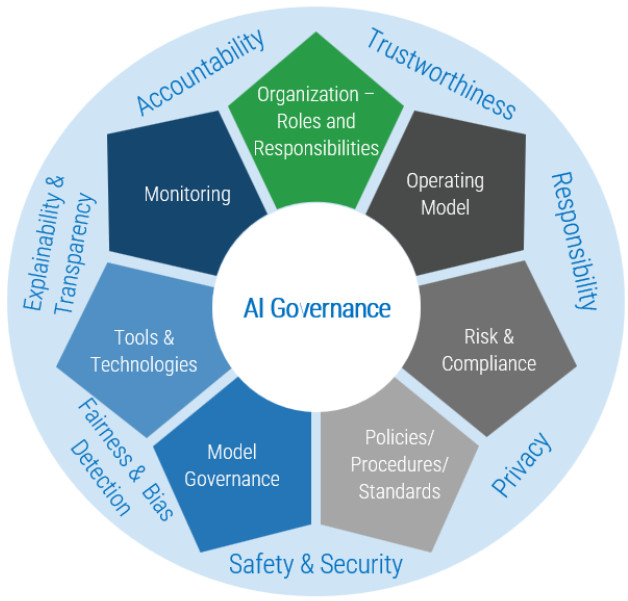
As governments and regulatory agencies accelerate the process of formalizing AI regulations, the need for compliance has become a major driving force for AI security investment. To meet this challenge, leading platforms are now incorporating governance and compliance functionality directly into the processes of security testing.

Compliance and Governance as Core Capabilities

The platforms link vulnerability and test data to compliance standards such as the EU AI Act and the NIST AI Risk Management Framework, developing traceable paths of testing coverage, outcome, and remediation actions. This significantly reduces the time and effort required for preparing audit trails or for regulatory inquiries.

However, lifecycle governance is also an important factor. Security testing platforms are now tracking model lineage, data provenance, configuration, and deployment history. This end-to-end visibility is useful for accountability, incident response, and internal risk reporting.

For global companies, automated governance enables compliance to become a proactive process rather than a reactive one. It also enables C-level executives to maintain AI risk management at a portfolio level, rather than having to synthesize reports from various teams.

Enterprise-Centric Security Platforms

VeraCode: Veracode provides a comprehensive AppSec solution that includes SAST, DAST, SCA, and infrastructure code scans. Veracode is best suited for large enterprises with centralized security teams, providing much better governance, compliance, and policy enforcement capabilities for regulated industries.

OpenText Fortify: Fortify is a mature enterprise-grade SAST and DAST solution providing much better SDLC integration and centralized risk management.

Developer-First Security Platforms for Fast-Moving Teams

GitHub Advanced Security: GitHub Advanced Security provides extra security features such as:

  •    + Code Scanning: Scans for vulnerabilities and coding errors
  •    + CodeQL CLI: For scanning locally running processes
  •    + Copilot Autofix: Automatically generates fixes for coding alerts
  •    + Security Review: Understand risk distribution across your organization


GitLab Ultimate: GitLab Ultimate provides the following security features:

  •    + SAST (Static Security Testing): Finds vulnerabilities in your code upon each commit
  •    + Compliance frameworks: You can create custom compliance frameworks and enforce compliance policies
  •    + Vulnerability Management: Provides a mechanism to find, prioritize, and discover security weaknesses across your organization


Mend: Mend, previously WhiteSource, is a software composition analysis solution that provides automated remediation and CI integration. Mend offers different security products, including:

  •    + Mend SAST: Provides an integrated solution that performs SAST (Static Application Security Testing). With CI/CD pipeline integrations, team leaders can check for vulnerabilities at the time of a merge request.
  •    + Mend SCA: Detects vulnerabilities in 200+ languages, frameworks, and development tools. It provides automated remediation, such as recommendations to update a particular software package.


Semgrep: Semgrep provides an AI-powered application security suite. It offers SAST, SCA, and secrets detection. This allows developers to quickly remediate issues detected by the AI-powered application security engine.

Automated and AI-Assisted Security Testing Alternatives

Detectify: Detectify focuses on continuous external attack surface monitoring, automatically discovering vulnerabilities from an attacker’s perspective. It is well suited to organizations prioritizing external exposure management.

HackerOne (ASM / AI Pen-testing): HackerOne uses the hybrid mechanism of Human + AI Assistance to detect and rectify security vulnerabilities. It uses Adversarial testing for AI systems to find critical safety, security and vulnerabilities in code, models, and APIs / integrations. Results can be mapped to compliance frameworks such as SOC/ GDPR and so on. This facilitates regulatory requirements and governance reporting

Cymulate: Cymulate uses the process of continuous Breach and Attack Simulation (BAS) and Continuous Automated Red Teaming (CART) to proactively identify security gaps before attackers can exploit them. Users can create custom attacks (based on their own history) to validate security updates.

Decision Framework: Aligning Tools With Enterprise Reality

The choice of AI and application security tools should be aligned with the enterprise reality of maturity, risk, and speed of delivery. Organizations in the regulated industries having strict compliance needs may find full-suite platforms like Veracode or Synopsys more attractive. On the other hand, companies requiring rapid development sprints would be more likely to use developer-friendly tools that integrate directly into the CI/CD pipeline.

Automated testing platforms allow for quick coverage, but these platforms should be complemented with more in-depth analysis for high-risk applications. The truth is that most enterprises are hybrid and use a combination of multiple tools.

Turning AI Security Into a Competitive Advantage

As enterprises scale AI adoption, the question is no longer whether to secure AI systems—but how quickly and effectively that security can be operationalized. Many organizations understand the risks, yet struggle to translate frameworks, tools, and regulations into execution. That is where FAMRO LLC comes in. Based in the UAE, FAMRO LLC combines deep AI/ML and enterprise IT expertise, with a proven delivery track record. Our teams have been working hands-on with AI and machine learning systems since 2018, supporting hundreds of successful projects across industries—from early experimentation to production-scale deployment. We help organizations move from AI ambition to AI assurance by:

  •    + Designing practical, scalable AI security and governance strategies
  •    + Rapidly mobilizing expert teams to assess, remediate, and operationalize controls
  •    + Aligning AI systems with enterprise risk, compliance, and business objectives
  •    + Delivering value fast—without disrupting innovation velocity


To help organizations get started, we offer a free initial consultation focused on your AI environment, risk posture, and regulatory exposure—no obligation, no generic pitch.

If your organization is investing in AI and wants confidence—not guesswork—now is the time to act.
🌐 Learn more: Visit Our Homepage
💬 WhatsApp: +971-505-208-240

Our solutions for your business growth

Our services enable clients to grow their business by providing customized technical solutions that improve infrastructure, streamline software development, and enhance project management.

Our technical consultancy and project management services ensure successful project outcomes by reviewing project requirements, gathering business requirements, designing solutions, and managing project plans with resource augmentation for business analyst and project management roles.

Read More
2
Infrastructure / DevOps
3
Project Management
4
Technical Consulting