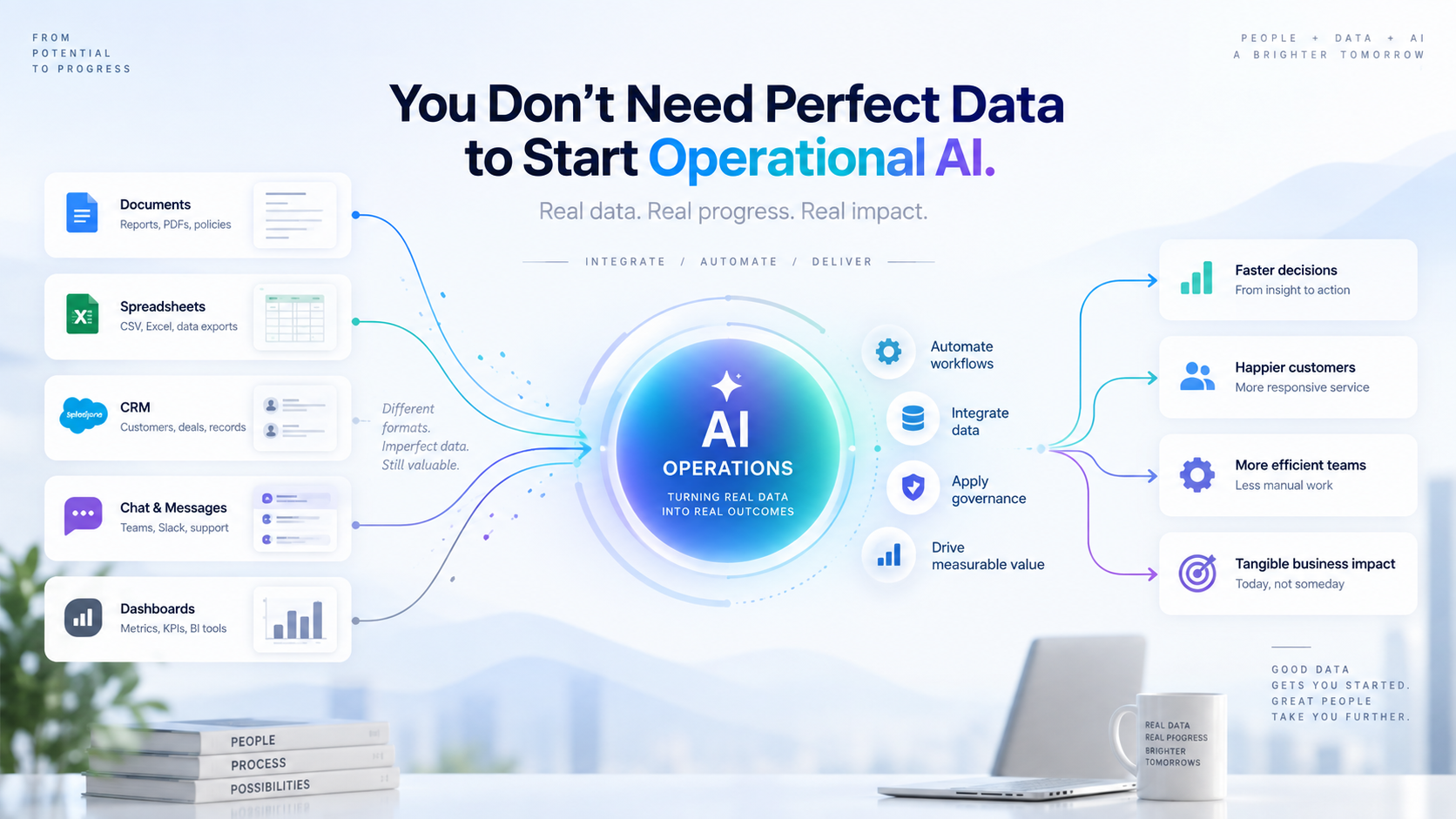
For many scale-ups and SMEs, the first obstacle to operational AI is not technology. It is the belief that the organisation must first complete a major data transformation.
The reasoning sounds sensible: consolidate databases, clean historical records, modernise legacy applications, establish a data lake or warehouse, standardise every taxonomy, resolve duplicate records, and implement enterprise-wide governance. Then, once the data estate is “AI ready,” start building AI.
The problem is that this sequence can postpone useful AI for years.
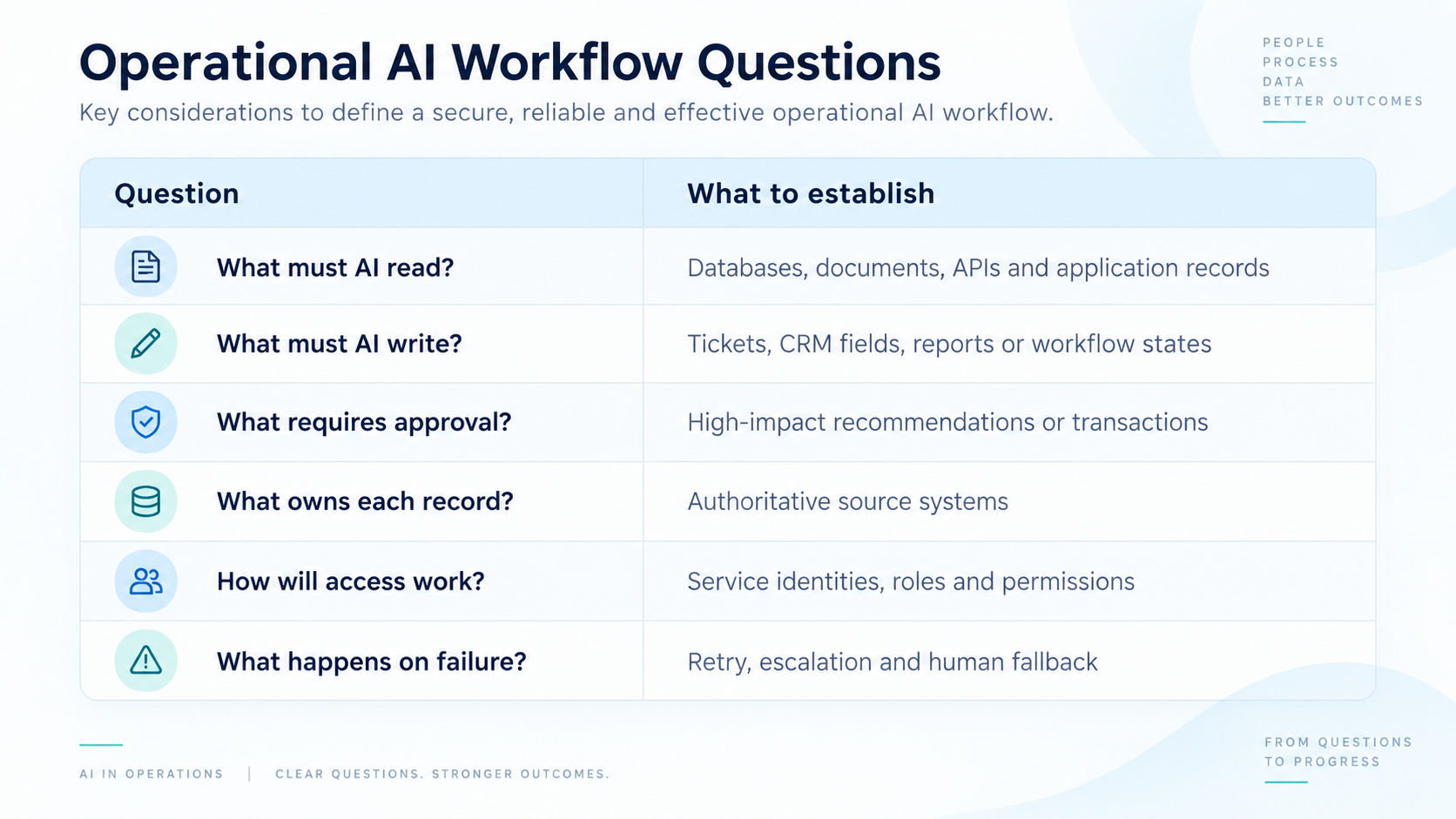
Direct answer: You do not need perfect enterprise data to start operational AI. You need data that is sufficiently accessible, reliable, governed, and connected for one clearly defined business workflow.
That distinction matters. The OECD reported in 2025 that only 11.9% of small firms across OECD countries were using AI, compared with 40% of large firms. It also identified data, connectivity, skills, compute and finance among the important enablers of SME adoption.
The objective, therefore, should not be to make every dataset perfect before delivering value. It should be to establish the minimum viable data foundation for a useful, controllable operational deployment.