Vibe coding has changed one of the oldest constraints in software development: the cost of turning an idea into something people can actually use.
A founder can describe a workflow and have an AI coding assistant scaffold an application. An enterprise product team can test an internal tool without waiting months for a formal delivery cycle. Engineers can generate interfaces, APIs, database models, integrations, tests, and documentation at a speed that would have seemed unrealistic only a few years ago.
That is valuable.
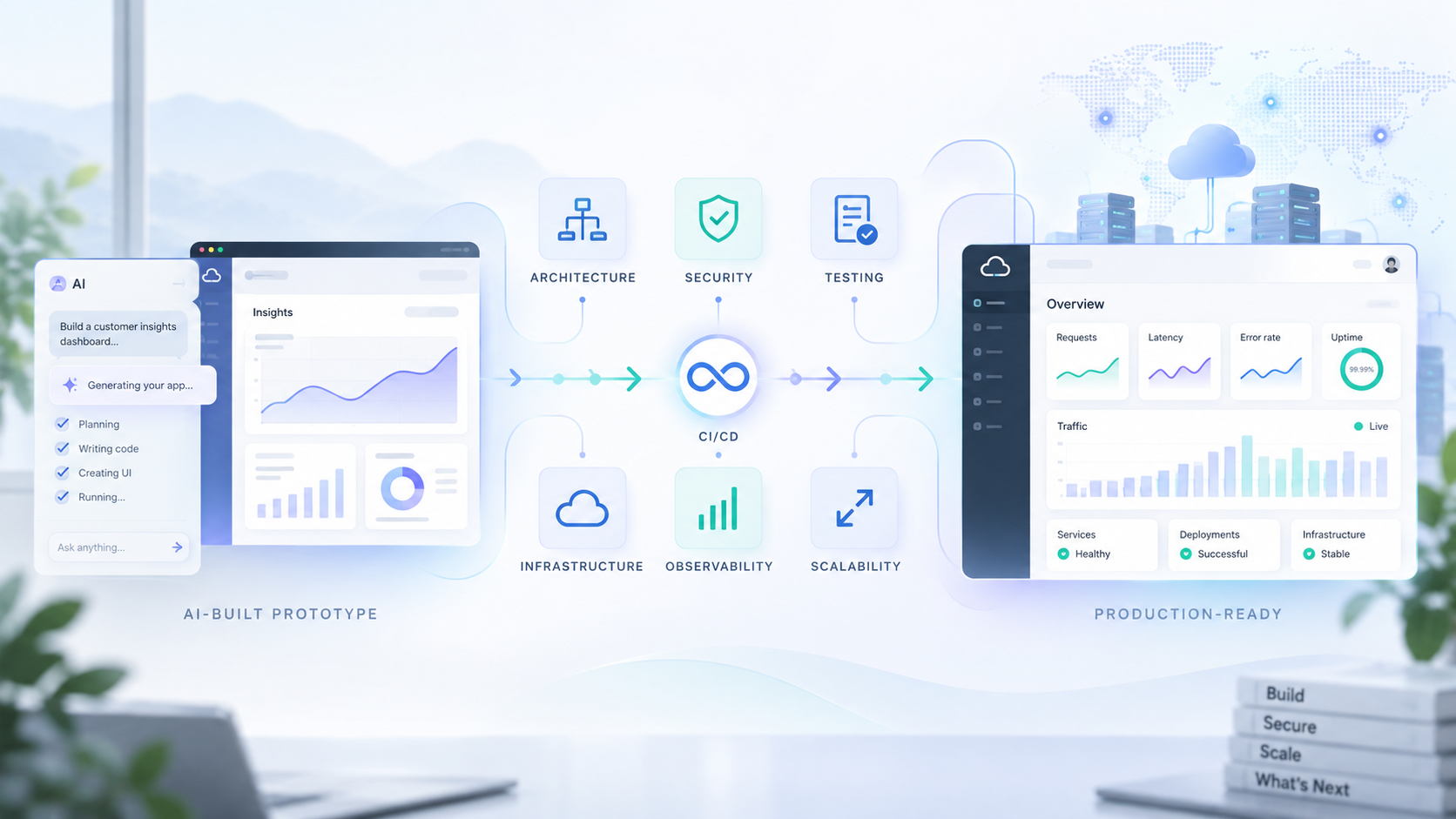
But a working prototype and a production system solve two different problems.
A prototype answers: Can this idea work?
Production asks: Can we safely depend on it?
That second question introduces architecture, identity, security, operations, data integrity, testing, resilience, maintainability, and organizational accountability. The challenge is no longer simply generating more code. It is determining whether the software can support real users and real business commitments at an acceptable level of risk.