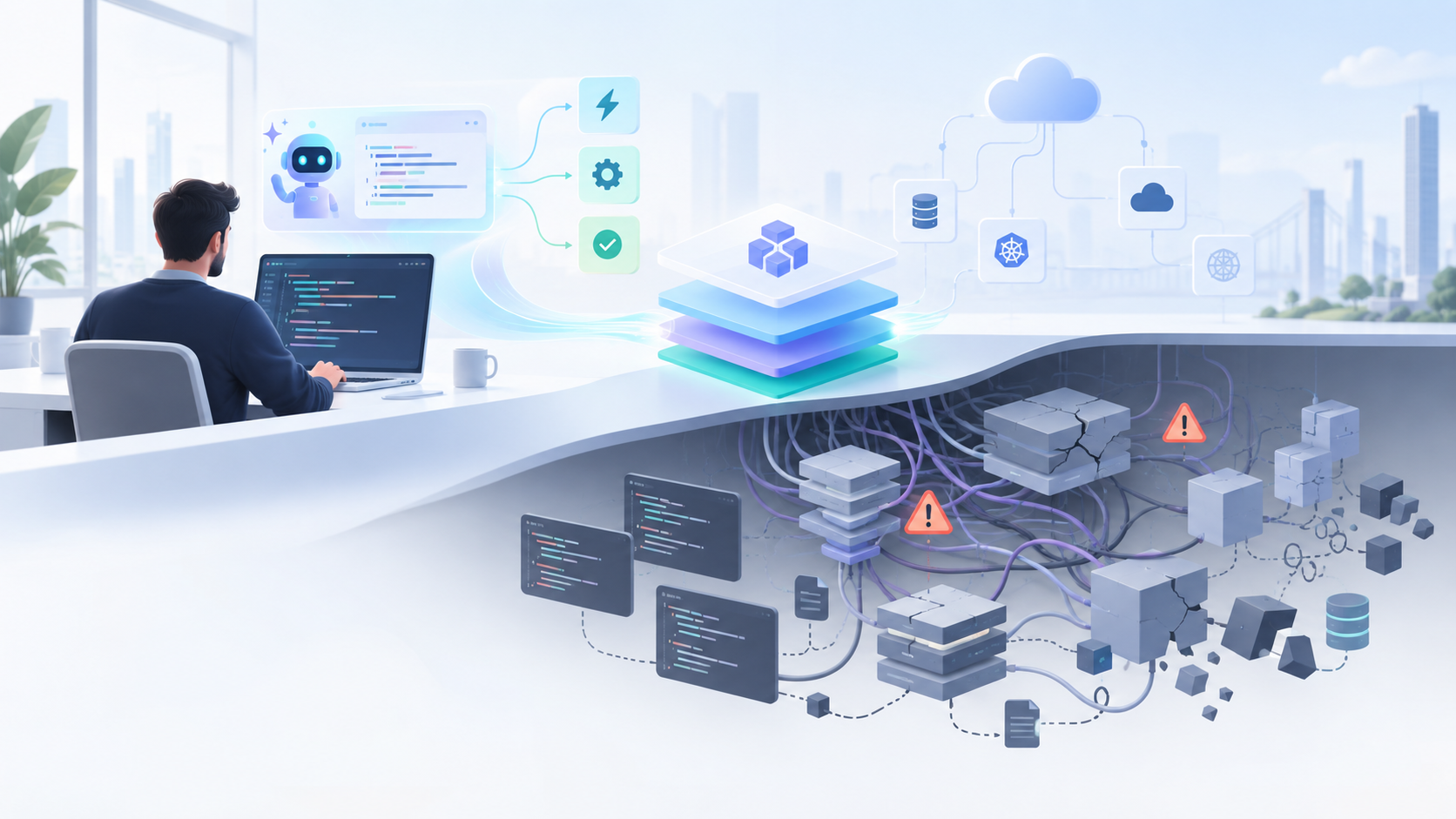
AI-assisted development has changed the economics of software delivery.
Engineering teams can now generate API endpoints, database queries, infrastructure definitions, unit tests, integrations, and entire application components in a fraction of the time previously required. For enterprises and fast-growing technology companies, that acceleration can translate into faster experimentation, shorter delivery cycles, and greater developer throughput.
But there is an important distinction between producing code faster and producing maintainable software faster.
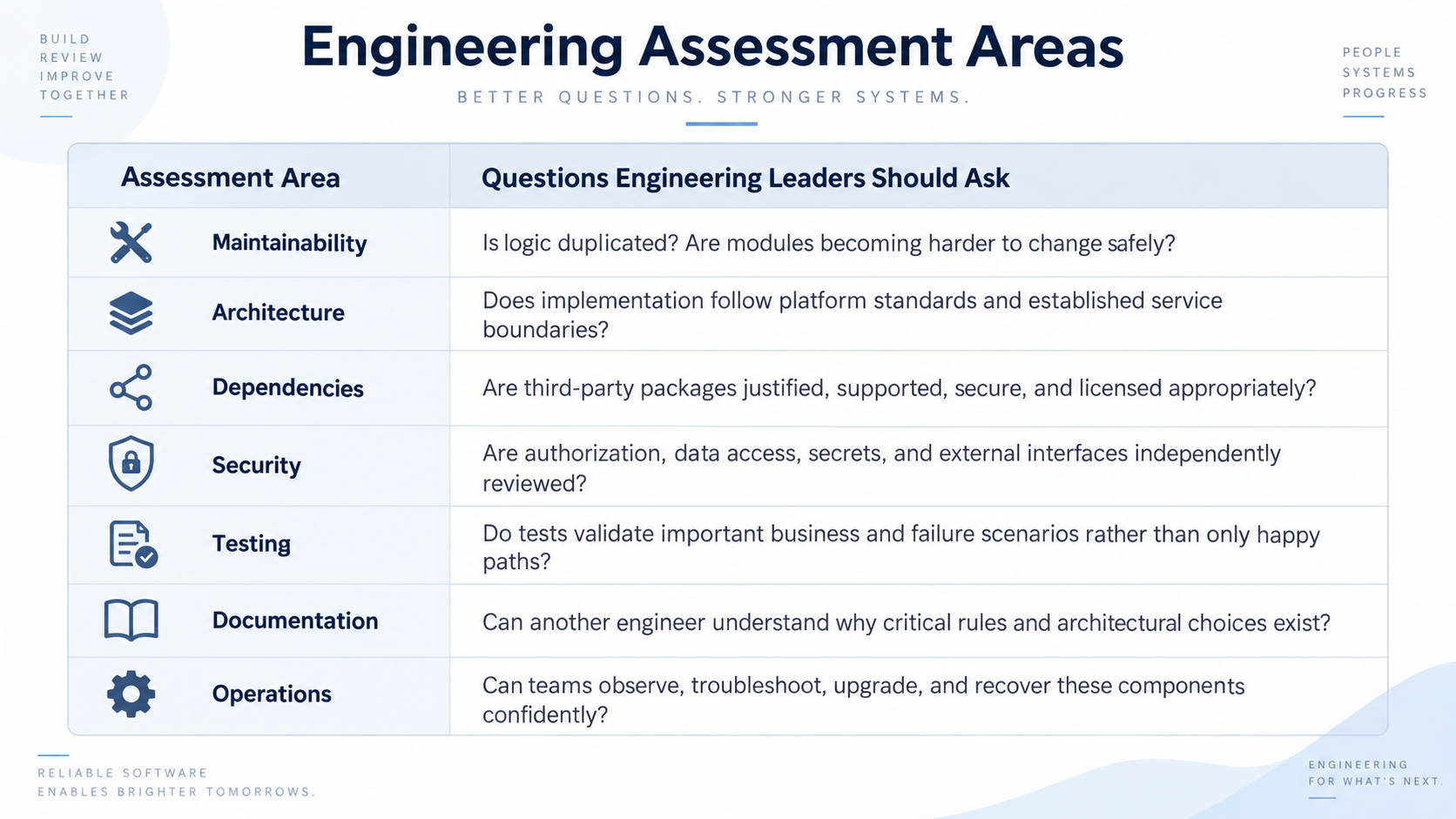
The code itself is only one component of the engineering cost equation. Every new implementation must still be understood, reviewed, tested, secured, integrated, documented, operated, and eventually modified.
That is where AI-generated code can create hidden technical debt.
Google's 2025 DORA research captures this broader dynamic well: AI does not automatically improve a software organization. It tends to amplify the systems, workflows, architecture, and engineering practices already in place.
For CTOs, the challenge is therefore not deciding whether developers should use AI. It is making sure that AI-assisted development does not increase software entropy faster than engineering governance can control it.